
Bathtub Installation & Repair
A bathtub has two jobs: hold water, and drain it. When either one fails, the damage rarely stays inside the tub. A failed seal around the rim lets water seep behind the wall. A slow drain backs water up into the tub and, eventually, into the floor below. A hairline crack in the surface leaks into the ceiling of the room underneath. Most bathtub problems start small — a peeling caulk line, a drain that takes longer to empty, a tub that flexes when you step in — and get expensive the longer they are left alone. We identify what is actually failing, then quote the specific fix. If the tub itself is sound and only the seal or drain has failed, that is what we replace.
Common problems
- Water pooling around the tub base
- Caulk line cracked, peeling, or black
- Tub drains slowly or not at all
- Water staining on the ceiling below
- Tub surface cracked or chipped
- Tub flexes or moves when stepped into
- Faucet drips or loses temperature control
What we do
- Diagnose the source of the leak
- Reseal the tub rim and base
- Replace cartridges and faucet parts
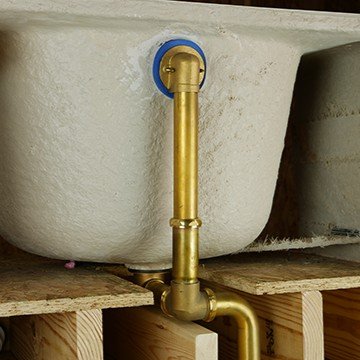
- Repair or replace tub drains
- Remove and dispose of old tubs
- Install new bathtubs
- Test seals and drains before we leave
Services & pricing
- Bathtub Cartridge Repair / Replacement — $219
- Bathtub Installation — $1,199
- Bathtub Resealing (parts included) — $229
- Bathtub Removal & Disposal — $99
All prices are flat rates for standard residential conditions. The $89 call-out fee is added to whichever service you approve.
FAQ
How do I know if the leak is from the tub or from the drain?
Fill the tub with a few inches of water and let it sit for an hour. If the water level drops and there is moisture around the base, the leak is at the rim or the overflow gasket. If the water level holds but there is moisture below the tub, the leak is in the drain assembly or the trap underneath. Both are repairable without replacing the tub in most cases.
The caulk around my tub keeps turning black. Why?
That is mold growing in the old caulk, and it usually means water is getting behind the seal and staying there. Simply scraping off the top layer will not fix it. The old caulk needs to be removed completely, the surface cleaned and dried, and new silicone applied. If the mold returns within weeks, the leak behind the wall is more serious than the caulk line shows.
My tub faucet drips even when it’s off. What causes that?
Almost always the cartridge. When the internal seals wear out, water finds a path past them and drips out of the spout. Replacing the cartridge usually solves it. If the drip continues after a new cartridge, the valve seat inside the faucet body has been damaged and needs to be addressed separately.
How long does a bathtub installation take?
A standard removal and installation is usually a full day, sometimes two if the wall needs to be opened for drain access.
CTA
Water showing up where it shouldn’t be? Call or text (778) 683-3344 and describe what you are seeing. We will tell you what it usually costs to fix.