
Plumber in Vancouver
Vancouver is not one housing market — it is at least four, and the plumbing problems are different in each one. The West Side has character homes from the 1920s to the 1950s in Kitsilano, Dunbar, and Kerrisdale, many still with original galvanized supply lines and clay or cast iron drains. Downtown and Coal Harbour have high-rises where the plumbing is shared, the shut-off valves are in a common mechanical room, and one leak travels three floors down. East Vancouver has a mix of older rental buildings, new laneway homes, and post-war bungalows being renovated. And the whole city sits on top of mature trees and aging sewer infrastructure that shows up in the same place every fall. We work across all of it, and the approach changes depending on which part of the city the job is in.
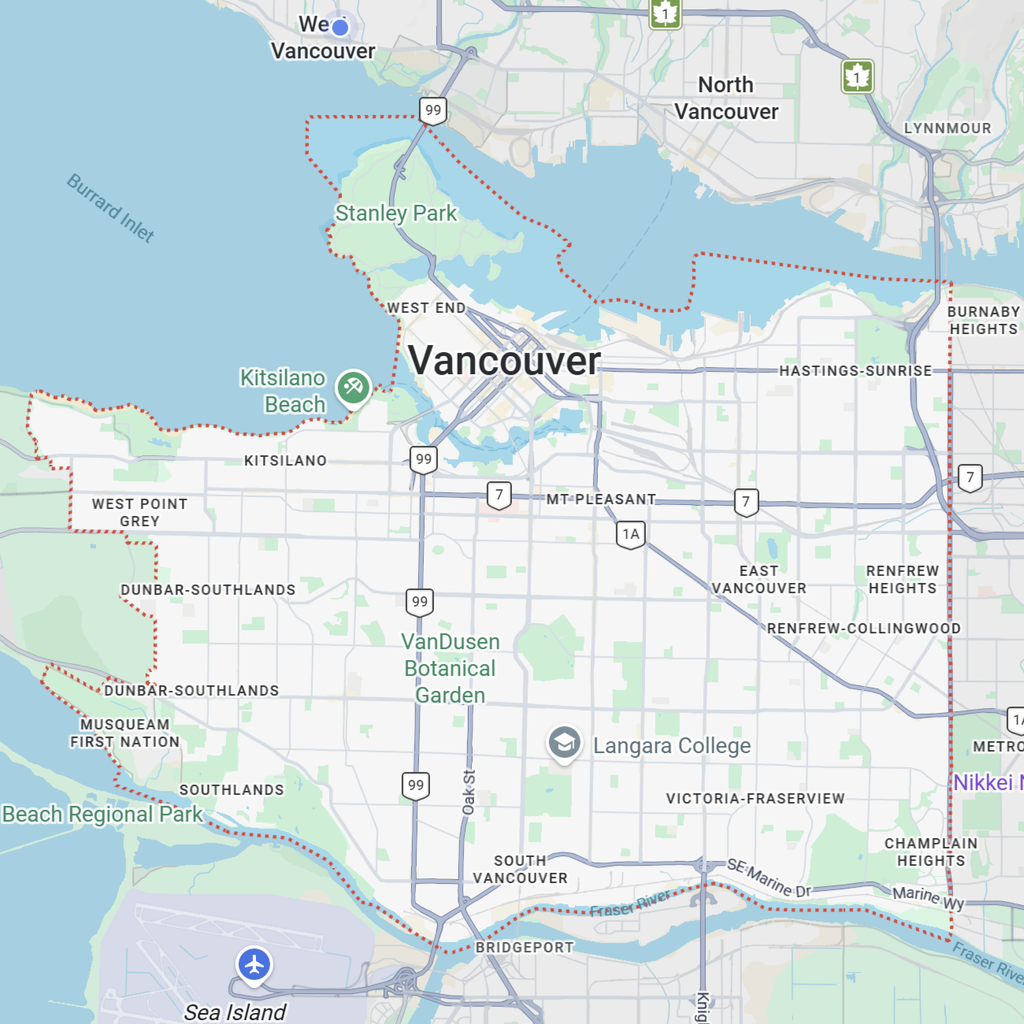
Plumbing services in Vancouver

Drain Cleaning
Clogged drains, main line clearing, camera inspection.
Water Heater
Tank and tankless. Repair, maintenance, and replacement.
Boiler Service
Hydronic heating, radiators, and radiant floors.
Bathroom
Toilets, showers, sinks, and faucets. Repair and replacement.
Kitchen
Faucets, sinks, garburators, dishwashers, and fridge lines.
Mechanical Room
Main valves, PRVs, water heaters, boilers, and sump pumps.
What we see in Vancouver homes
Character homes on the West Side
Kitsilano, Dunbar, Kerrisdale, Shaughnessy, and Arbutus Ridge have some of the oldest housing stock in the city. A lot of it was built between the 1920s and the 1950s, and much of it still has original plumbing — galvanized steel supply lines and clay or cast iron drain lines. Galvanized lines narrow from the inside and eventually lose pressure. Clay drains crack and let roots in. Cast iron drains corrode and eventually collapse. None of these fail suddenly, but all of them fail predictably, and the first sign is usually a slow drain or low pressure that gets worse over time.
High-rises and strata buildings
Downtown, Coal Harbour, Yaletown, and the West End have a high concentration of high-rise and mid-rise buildings, and plumbing in these buildings is shared. A supply line in one unit connects to a stack that serves multiple floors. A shut-off valve is often in a common mechanical room, not in the unit. A leak in one unit travels to the one below. We work with strata councils and property managers on these buildings, document everything for the building’s records, and coordinate scheduling to minimize disruption to residents.
Tree roots in mature neighborhoods
Vancouver has some of the oldest and largest street trees in Metro Vancouver, and their root systems have had decades to find their way into older clay and concrete sewer lines. A drain that clogs once is usually a fixture problem. A drain that clogs twice in the same year, or that backs up during heavy rain, is usually a root problem, and it needs camera inspection to confirm. Once roots are in a line, they come back — maintenance is part of the ongoing cost, not a one-time fix.
East Vancouver: mixed housing, mixed problems
East Van has one of the most varied housing stocks in the city. Post-war bungalows being renovated. Older rental buildings from the 1960s and 70s. New laneway homes squeezed into backyards. Each one brings a different kind of plumbing work. Renovated bungalows need new rough-ins and upgraded systems. Older rental buildings need shut-off valves replaced and PRVs tested. Laneway homes need full new plumbing systems, from rough-in to final fixture.
Water pressure and PRVs
Vancouver’s water pressure varies by elevation and by the age of the municipal supply line on the street. In older parts of the city, the incoming pressure can be high enough that a properly functioning PRV is not optional — it is the only thing standing between the city supply and the fixtures in the house. A failed PRV shows up as either low pressure everywhere or high pressure that starts finding weak points in the plumbing.
Mature rental stock
Much of Vancouver’s rental housing was built between 1955 and 1975, and many of those buildings still have their original plumbing. Shut-off valves that have not been turned in years. Water heaters past their service life. PRVs that have never been tested. For owners and property managers, the pattern is predictable: the systems work until they do not, and by then the fix is more expensive than the maintenance would have been.
Neighborhoods we serve in Vancouver
- Kitsilano
- Dunbar
- Kerrisdale
- Shaughnessy
- Arbutus Ridge
- Point Grey
- West Point Grey
- Marpole
- Oakridge
- Coal Harbour
- Yaletown
- Gastown
- West End
- Downtown Core
- Chinatown
- Strathcona
- Mount Pleasant
- Commercial Drive
- Hastings-Sunrise
- Renfrew-Collingwood
- Killarney
- Victoria-Fraserview
- Riley Park
- Grandview-Woodland
If your address is not on this list, call us anyway. If you are in Vancouver, we come.
Why homeowners in Vancouver call us
- Flat-rate pricing — the number you see is the number you pay
- Quoted in writing before any work starts
- 30-day workmanship guarantee on every job
- Red Seal technicians on every visit
- Same-day service for most repairs
- Emergency calls answered after hours
- No hourly billing, no surprises on the invoice
FAQ
Do you charge extra to come to Vancouver?
No. Vancouver is one of our core service areas. The standard $89 call-out fee applies, with no additional travel charge. The same applies to West Vancouver, North Vancouver, Burnaby, Richmond, New Westminster, Lions Bay, and Squamish.
I live in a strata building. Who do I call for a plumbing issue in my unit?
Start with your strata council or property manager. In most strata buildings, plumbing inside your unit is your responsibility, but anything connected to the common system — the drain stack, the main shut-off, the shared water line — is common property. If the issue is inside your unit and does not affect shared lines, you can book us directly. If it involves common property, we coordinate with your strata or property manager, and we document everything for the building’s records.
My house was built in the 1940s and still has original pipes. Should I replace them?
Depends on the pipe material. Galvanized steel supply lines narrow over time and eventually lose pressure — replacement is usually the right answer once the pressure drop is noticeable. Clay drain lines crack and let roots in — camera inspection tells you whether the line is still sound or needs spot repair. Copper supply lines from the 1950s and 60s can last decades more if they are in good condition. We inspect the system and tell you honestly which parts need attention now and which still have life left.
My basement drain backs up during heavy rain. Why?
Three common causes in Vancouver. First, tree roots in the main line — the most common one, especially in older neighborhoods with mature street trees. Second, a cracked or collapsed section of pipe that lets groundwater in during heavy rain. Third, a failed backwater valve. Camera inspection confirms which one it is, and the fix depends on what the camera shows.
Do you work with property managers and strata councils?
Yes. We work on common property plumbing and mechanical systems in strata buildings and multi-unit residential buildings across Vancouver. Invoices are itemized for strata records, and we can coordinate scheduling with property managers to minimize disruption to residents. For buildings with recurring needs, we can set up a maintenance agreement with scheduled service intervals.
Why does my shower pressure change during the day?
That is usually the pressure reducing valve. In Vancouver, elevation and the age of the municipal supply line both affect incoming pressure, and the PRV is what stabilizes it for the house. If the pressure changes noticeably between morning and evening, the PRV is either misadjusted or starting to fail. A pressure test will confirm it.
Can you handle an emergency call in Vancouver at night?
Yes. Emergency calls are answered after hours, and Vancouver is one of our core areas. The emergency call-out fee is $139, and any repair that follows is billed at 1.5 times the standard rate. Both numbers are confirmed before we start.
Ready to book a visit or get a quote?
Call, text, or send us a message. If you are not sure which service applies, describe the problem in your own words — we will tell you what it sounds like and what it usually costs to fix. You do not need to know plumbing terminology to reach us.