
Main Shut-off Valve Replacement
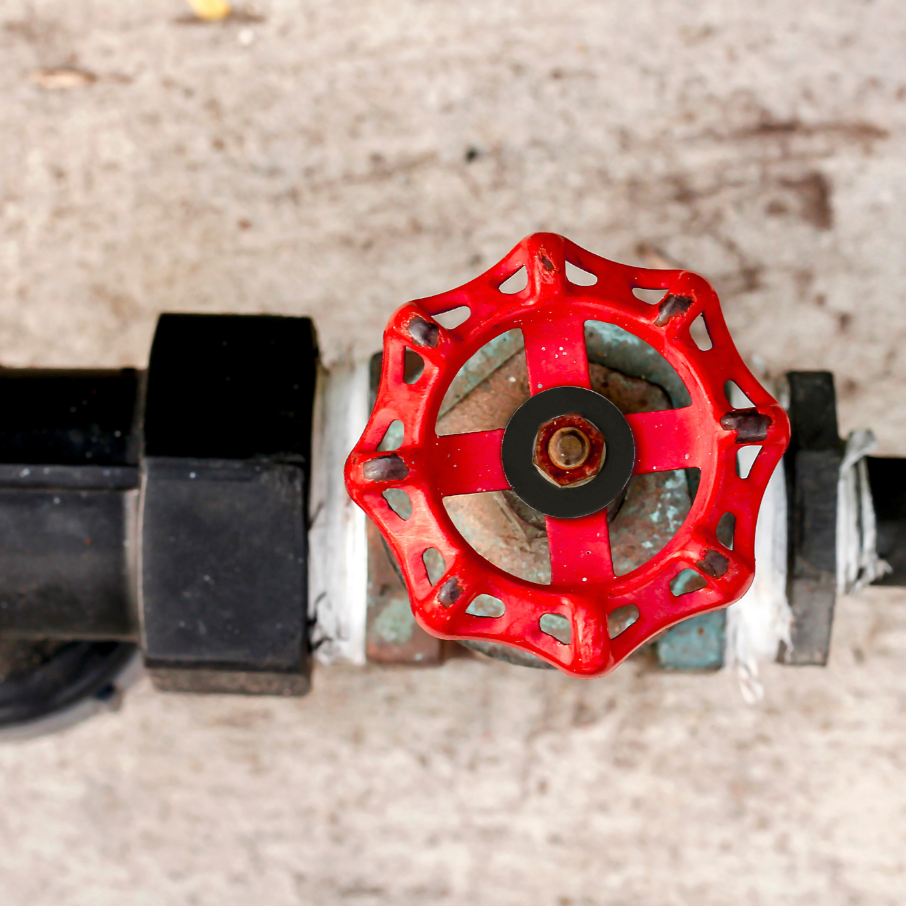
The main shut-off valve is the one valve in the house that has to work in an emergency. If a pipe bursts, this is what stops the water. If the toilet overflows and the local shut-off will not close, this is what saves the floor. The problem is that most main valves have not been turned in years — sometimes decades — and when they finally need to be used, they either will not turn, will not close fully, or snap off in your hand. A valve that fails open is worse than no valve at all, because it gives a false sense of control. We replace main shut-off valves with quarter-turn ball valves, which do not seize from disuse, and we test the new valve before we leave. The job is usually done in one visit.
Common problems
- Valve will not turn by hand
- Valve turns but water keeps flowing
- Valve handle broken or missing
- Valve leaking from the stem
- Valve leaking from the body
- Valve seized from years of disuse
- Slow drip around the valve body
What we do
- Locate and confirm the main valve
- Shut off water at the street if needed
- Replace old gate valves with ball valves
- Replace broken or missing handles
- Repair stem and body leaks
- Test the new valve under pressure
- Advise on where to add a second valve
Services & pricing
- Main Shut-off Valve Replacement (3/4″ – 1″) (parts included) — $299
- Main Shut-off Valve Replacement (1 1/4″ – 1 1/2″) (parts included) — $349
- Main Shut-off Valve Replacement (2″) (parts included) — $399
All prices are flat rates for standard residential conditions. The $89 call-out fee is added to whichever service you approve.
FAQ
How do I know if my main shut-off valve still works?
Turn it clockwise slowly until it stops, then turn it back. If it turns smoothly and stops the water, it is working. If it is stiff, grinding, or will not turn at all, it has seized and needs to be replaced. Do not force it — a valve that snaps off under pressure is worse than one that is stiff but intact.
Why do old main valves fail?
Most older homes have gate valves, which rely on a metal gate moving up and down inside the body. Over years, mineral buildup and corrosion cause the gate to seize against the seat. Once that happens, the valve either will not move or will not close fully. Ball valves use a rotating sphere instead of a gate, and they do not seize the same way.
Can you replace the valve without shutting off water to the whole street?
In most cases, yes. There is usually a city shut-off at the property line that we can use for the duration of the job. If there is not, or if the city valve itself is seized, we coordinate with the municipality to shut off the water for the time it takes to replace the valve. We confirm this before starting.
What size valve does my house need?
The size is determined by the pipe diameter feeding the house, not by the size of the house itself. Most residential homes use 3/4″ to 1″. Larger homes and some multi-unit properties use 1 1/4″ to 1 1/2″, and 2″ is usually only for commercial or large multi-family buildings. We confirm the size before quoting, so you do not pay for a larger valve than your plumbing needs.
Should I replace the main valve even if it is not broken?
If the valve is more than fifteen years old, or if it has not been turned in five years, it is worth replacing before something goes wrong. A main valve that fails during an emergency is not a repair problem — it is a flood problem. Replacing it on a scheduled visit is cheaper and less stressful than replacing it at 2 AM with water running through the house.
How long does a main valve replacement take?
A standard replacement is usually one to three hours, depending on the valve size and whether the water needs to be shut off at the street.
CTA
Main valve stiff, leaking, or will not close? Call or text (778) 683-3344 and describe the setup. We will tell you what it usually costs to fix.