
PRV Replacement & Pressure Testing
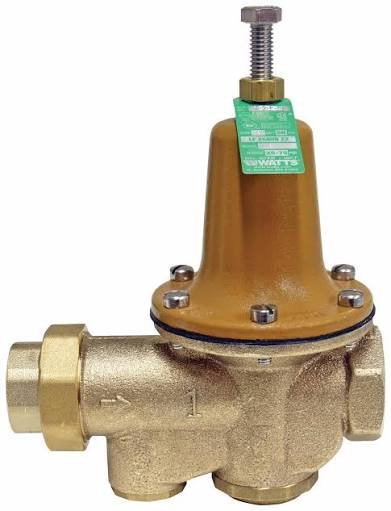
The pressure reducing valve, or PRV, controls water pressure for the entire house. It sits on the main line just after the shut-off valve and drops the city supply — which can run 100 to 150 psi or higher — down to a range that fixtures and appliances can handle, usually around 50 to 70 psi. When it works, nobody notices it. When it fails, it fails in one of two directions. Either the pressure drops, and every fixture feels weak — the shower is disappointing, the washing machine takes forever to fill, the dishwasher underperforms. Or the pressure rises, and every pipe, hose, and appliance seal is under strain it was not designed for. High pressure is the more expensive failure, because it finds the weakest connection in the house and eventually bursts it. We test the incoming and outgoing pressure, confirm whether the PRV is the problem, and either adjust it or replace it in one visit.
Common problems
- Low water pressure at all fixtures
- High water pressure at all fixtures
- Pressure changes throughout the day
- Water hammer or banging in the pipes
- Fixtures wearing out faster than expected
- Supply hoses failing repeatedly
- Water pressure higher after 10 PM
What we do
- Test incoming and outgoing pressure
- Confirm whether the PRV is the cause
- Adjust existing PRVs to the correct setting
- Replace failed pressure reducing valves
- Check nearby valves and connections
- Test pressure after adjustment or replacement
- Advise on pressure if it is unusually high
Services & pricing
- Pressure Testing & PRV Adjustment — $339
- PRV Replacement (3/4″ – 1″) — $369
- PRV Replacement (1 1/4″ – 1 1/2″) — $429
- PRV Replacement (2″) — $489
All prices are flat rates for standard residential conditions. The $89 call-out fee is added to whichever service you approve. Parts are not included.
FAQ
How do I know if my PRV is failing?
Two signs. First, water pressure changes noticeably from one part of the day to another — the shower feels different at 6 AM than it does at 9 PM. Second, the pressure is either too low everywhere or too high everywhere. A cheap pressure gauge on a hose bib will tell you the actual number. If it reads above 80 psi or below 40 psi, the PRV is usually the cause.
What is the difference between adjusting and replacing a PRV?
Adjustment means the valve itself is still working, but the pressure setting has drifted out of range. Adjustment is a one-visit job and usually costs less. Replacement means the internal mechanism has failed — the spring has lost tension, the diaphragm has ruptured, or the valve no longer holds a setting at all. Replacement requires cutting out the old valve and installing a new one.
What pressure should my house be set to?
Most residential plumbing is designed for 50 to 70 psi. Above 80 psi, you start to see premature failures in supply hoses, appliance valves, and fixture cartridges. Below 40 psi, fixtures feel weak and some appliances will not fill properly. If your incoming city pressure is unusually high, the PRV brings it down to the correct range; if your city pressure is already within range, some homes do not need a PRV at all.
Can high water pressure really damage my plumbing?
Yes, and it is the more expensive failure. Every hose, valve, and appliance seal in the house is rated for a maximum pressure. When city pressure runs above that rating, the weakest connection fails first — usually a supply hose behind a washer or a fitting behind a wall. That is why a high-pressure PRV failure often shows up as a leak in a completely different part of the house.
Are parts included in the PRV replacement price?
No. The prices shown are for the labor to remove the old valve, install the new one, and set the pressure. The PRV itself, along with any fittings, adapters, or pipe sections required, are billed separately. We tell you the parts cost before starting the job.
How long does the job take?
Pressure testing and adjustment is usually under an hour. PRV replacement is usually one to two hours, depending on the valve size and how accessible the valve is.
CTA
Water pressure too high, too low, or changing through the day? Call or text (778) 683-3344 and describe what you are seeing. We will tell you what it usually costs to fix.