
Water Heater Repair & Replacement
A water heater is the appliance you notice only when it stops working. And when it stops, it usually stops at the worst possible time — on a weekend, during a house full of guests, or in the middle of winter. Most tank water heaters fail in one of three ways: the burner or element stops heating, the tank itself starts to leak, or the sacrificial anode corrodes and the tank follows shortly after. The first two are repair problems. The third is a replacement problem, because a leaking tank cannot be repaired. Tankless units have their own failure modes — scale buildup, igniter failure, and flow sensor issues — and those are usually serviceable. We diagnose which situation you are in, then quote the repair or the replacement before anything is disconnected.
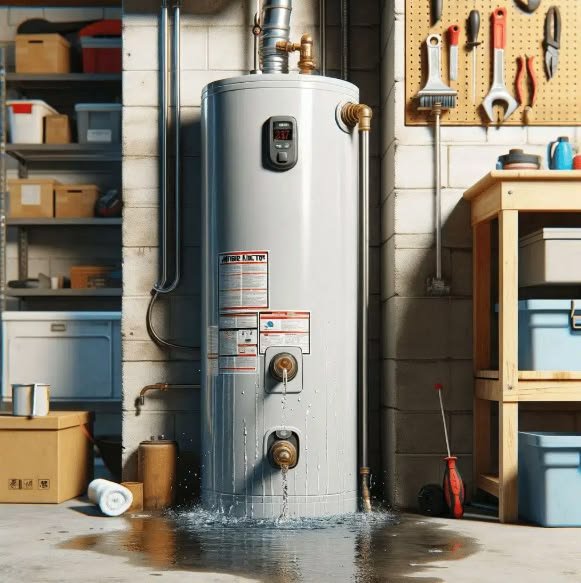
Common problems
- No hot water at all
- Hot water runs out too fast
- Water not hot enough
- Rusty or discolored hot water
- Water pooling around the tank
- Banging, popping, or rumbling sounds
- Pilot light or igniter not working
What we do
- Diagnose the heating, leak, or sensor issue
- Repair burners, elements, and thermostats
- Replace TPR valves and expansion tanks
- Flush and descale tank and tankless units
- Replace leaking tank water heaters
- Install tankless and tank water heaters
- Test for leaks, pressure, and temperature
Services & pricing
- Water Heater Repair / Diagnostic — $189
- Water Heater Flush & Maintenance — $249
- TPR Valve Replacement (parts included) — $229
- Tank Water Heater Replacement — Contact for quote
- Tankless Water Heater Installation — Contact for quote
- Old Water Heater Removal & Disposal — $99
All prices are flat rates for standard residential conditions. The $89 call-out fee is added to whichever service you approve. Replacement and installation services are priced individually based on unit type, venting, gas line, and location.
FAQ
How do I know if my water heater needs to be replaced or repaired?
If the tank itself is leaking — water pooling around the base, rust streaks down the side — it needs to be replaced. A leaking tank cannot be repaired. If the tank is not leaking but you have no hot water, inconsistent temperature, or banging sounds, the issue is usually the burner, element, thermostat, or sediment buildup, and those are all repairable.
Why is water heater replacement priced individually?
Because no two installs are the same. The price depends on the unit you choose, the venting setup in your home, whether the gas line needs to be upgraded, and where the tank is located. A like-for-like replacement in an accessible spot is one job. A conversion from tank to tankless with new venting is a different one. We scope it in person, then give you a written quote before any work begins.
Should I switch to tankless when I replace my water heater?
That depends on three things: your hot water demand, your venting situation, and your budget. A tankless unit heats water on demand and never runs out, but it also has a higher upfront cost and requires a dedicated vent and gas line in most cases. If you have a large household with multiple simultaneous showers, a tankless unit is worth considering. If your demand is average, a tank replacement is usually the simpler and cheaper choice.
How long does a water heater last?
A standard tank water heater lasts eight to twelve years, depending on water quality and whether the anode rod has been replaced. A tankless unit lasts fifteen to twenty years with regular descaling. If your tank is over ten years old and has never been serviced, it is worth having it checked before it fails.
Why is my hot water rusty?
Rusty hot water almost always means the inside of the tank is corroding. This happens when the sacrificial anode — the rod that is designed to corrode instead of the tank — has been used up. Once the anode is gone, the tank itself starts to rust from the inside. If the rust is only in the hot water and not the cold, the tank is the source, and replacement is usually the right answer.
What is the TPR valve, and why does it matter?
TPR stands for Temperature and Pressure Relief. It is the valve on the side of the tank that opens if the temperature or pressure inside gets too high. Without a working TPR valve, a water heater can become a pressure vessel, which is dangerous. The valve is inexpensive to replace and should be checked any time the tank is serviced.
CTA
No hot water, leaking tank, or ready to switch to tankless? Call or text (778) 683-3344 and describe what is happening. We will tell you what it usually costs to fix.