
Plumber in Squamish
Squamish is a different job than the rest of our service area, and the reason is not the geography — it is the housing. The town has grown faster than almost anywhere else in BC over the last fifteen years, which means most of the housing stock is either brand new or older than anything in Metro Vancouver. New builds in Garibaldi Highlands and Valleycliffe have modern systems that need maintenance, not repair. The older homes from the logging and mill era — many built between the 1950s and 1980s — still have original plumbing and heating systems that were never designed for the cold snaps Squamish gets in winter. Add in a smaller pool of local plumbers and the distance from Vancouver, and the practical reality here is that an emergency call is more urgent when it happens. We work in Squamish regularly, and we plan the drive into the job the same way we plan the repair.
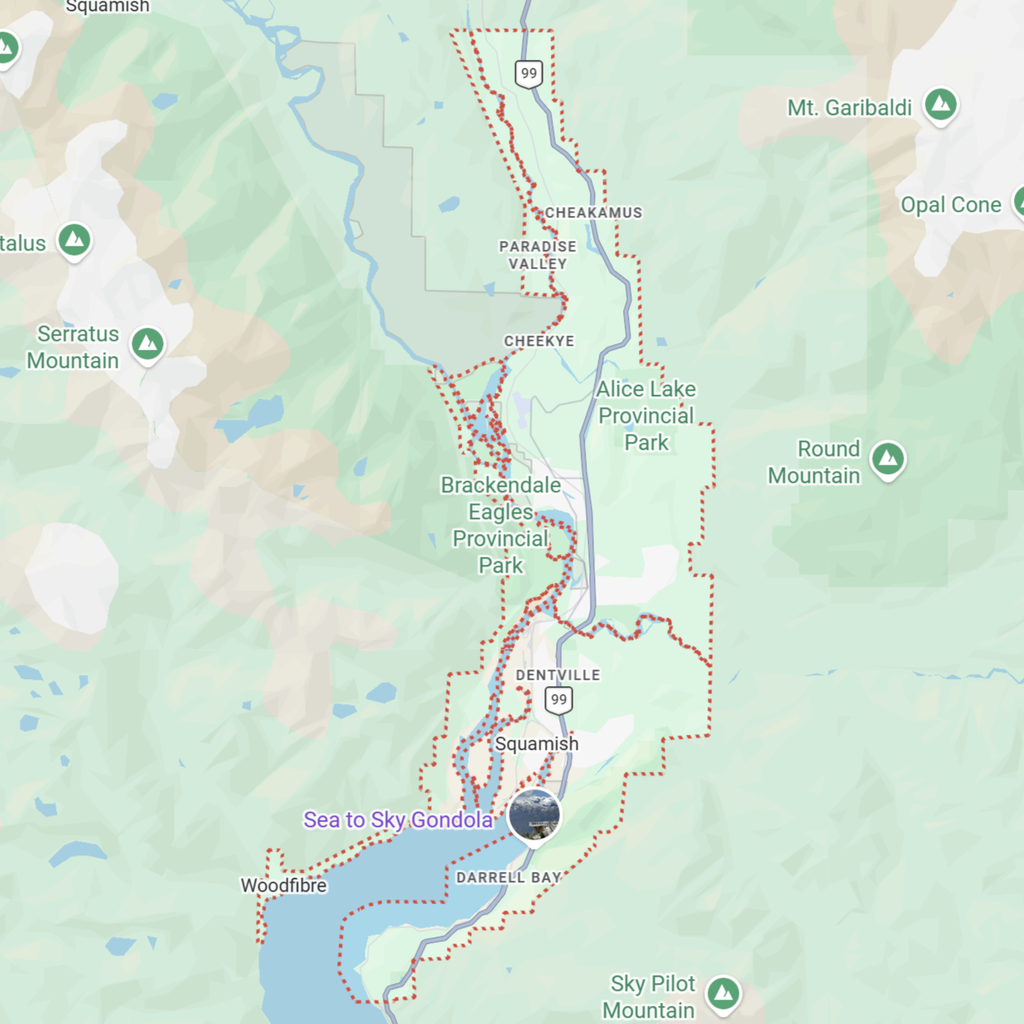
Plumbing services in Squamish

Boiler Service
Hydronic heating, radiators, and radiant floors.
Water Heater
Tank and tankless. Descaling for hard water areas.
Drain Cleaning
Clogged drains, main line clearing, camera inspection.
Bathroom
Toilets, showers, sinks, and faucets. Repair and replacement.
Mechanical Room
Main valves, PRVs, water heaters, boilers, and sump pumps.
Kitchen
Faucets, sinks, garburators, dishwashers, and fridge lines.
What we see in Squamish homes
Cold snaps and freezing pipes
Squamish gets colder than Metro Vancouver in winter, and that difference matters for plumbing. Supply lines in exterior walls, unheated crawlspaces, and garage ceilings freeze faster here than in the city. A pipe that freezes and splits does not leak until it thaws, which means the damage usually happens hours after the cold snap passes. The two things that prevent this are insulation on exposed lines and, more importantly, keeping the heat on during cold snaps — a house left empty for a weekend in January is the most common setup for a burst pipe. If a home is going to be empty during winter, shut the water off at the main valve and drain the lines.
Older mill-era homes
Squamish still has a significant number of homes built between the 1950s and 1980s during the logging and mill era. Many of those homes have original galvanized steel supply lines, original cast iron or clay drains, and original heating systems. Galvanized lines narrow from mineral buildup and lose pressure over time. Cast iron drains corrode from the inside and eventually crack. Boilers from that era are past their service life even if they are still running. None of these fail suddenly, but all of them fail predictably, and the first sign is usually a slow drain or a cold morning.
New builds with modern systems
Garibaldi Highlands, Valleycliffe, and the newer developments around Brennan Park and the Squamish Valley have grown quickly, and most of the housing stock in those areas is less than fifteen years old. Those homes have modern systems — PEX supply lines, tankless water heaters, hydronic heating — that need maintenance, not repair. Tankless units need annual descaling. Hydronic systems need annual service. PRVs need to be checked. Most of these systems work well for years and then fail in predictable ways when maintenance is skipped.
Hard water and scale buildup
Water in Squamish comes from a mix of surface and groundwater sources, and some areas have harder water than Metro Vancouver. Hard water leaves scale in water heaters, tankless units, boilers, and fixtures, which shortens their service life and reduces efficiency. Annual descaling is not optional here — it is the difference between a tankless unit that lasts fifteen years and one that fails in five. If you are seeing white crust on fixtures, reduced flow from shower heads, or popping sounds from the water heater, scale is the cause.
Vacation properties and rentals
Squamish has a significant number of vacation properties, short-term rentals, and weekend homes. Those properties sit empty for weeks at a time, and the plumbing problems that come with vacancy are different from the ones in a home that is lived in every day. Water sits in the lines, water heaters cycle less often, and a small leak that would have been noticed immediately in a lived-in home goes unnoticed for weeks. If you own a property in Squamish that is not occupied year-round, it is worth having the plumbing checked once a year and shutting the water off between visits.
Distance and emergency response
Squamish is about 45 minutes from North Vancouver, which means an emergency call here takes longer to reach than a call in the city. That changes the practical advice. It is more important to know where your main shut-off valve is. It is more important to have the tools to shut off the water yourself if something fails. And it is more important to address small problems before they become emergencies, because the cost of a Squamish emergency call reflects the distance we have to drive.
Neighborhoods we serve in Squamish
- Downtown Squamish
- Cleveland Avenue area
- Mamquam
- Squamish Valley
- Garibaldi Highlands
- Garibaldi Estates
- Plateau
- Tantalus
- Valleycliffe
- Brackendale
- Brackendale Estates
- Cheekye
- Paradise Valley
- Britannia Beach
- Furry Creek
- Porteau Cove
- Sea-to-Sky corridor
If your address is not on this list, call us anyway. If you are in the Squamish area, we come.
Why homeowners in Squamish call us
- Flat-rate pricing — the number you see is the number you pay
- Quoted in writing before any work starts
- 30-day workmanship guarantee on every job
- Red Seal technicians on every visit
- Same-day service for most repairs
- Emergency calls answered after hours
- No hourly billing, no surprises on the invoice
FAQ
Do you charge extra to come to Squamish?
Squamish is one of our core service areas, and the standard $89 call-out fee applies. For addresses outside the core areas — including Britannia Beach, Furry Creek, and Porteau Cove — a travel-time rate is added and confirmed before we schedule the visit. We tell you the number upfront, not on the invoice.
How do I prevent my pipes from freezing in winter?
Three things. First, insulate any exposed supply lines in the crawlspace, garage, or exterior walls. Second, keep the heat on during cold snaps, even if you are away — setting the thermostat to 15°C is enough to prevent most freezing. Third, if the house will be empty for more than a few days in winter, shut off the water at the main valve and drain the lines. A burst pipe does not leak until it thaws, so the damage is usually worse than the initial freeze suggests.
My house was built in the 1970s and still has original plumbing. What should I check first?
Two things. First, the supply lines: if they are galvanized steel, look for low water pressure and discolored water. Second, the heating system: if it is an original boiler, have it serviced before winter and check the pressure gauge. Boilers from that era are past their expected service life, and the first sign of failure is usually a cold morning, not a warning. We can inspect the system and tell you honestly which parts need attention now and which still have life left.
How often should a tankless water heater be descaled in Squamish?
Once a year. Some areas of Squamish have harder water than Metro Vancouver, and hard water leaves scale in the heat exchanger faster. A tankless unit that is descaled every year lasts fifteen to twenty years. One that is never descaled usually fails in five to seven. Annual descaling is the single most important maintenance item on a tankless unit here.
I own a vacation property in Squamish. What should I do when it is empty?
Shut the water off at the main valve. Drain the lines if the property will be empty through a cold snap. Set the heat to at least 15°C. If the property has a sump pump, test it before leaving. And once a year, have the plumbing checked in person — a small leak in an empty house goes unnoticed for weeks, and by the time it is discovered the damage is already done.
Do you work with strata councils and property managers in Squamish?
Yes. We work on common property plumbing and mechanical systems in strata buildings, townhouse complexes, and multi-unit residential buildings across Squamish. Invoices are itemized for strata records, and we can coordinate scheduling with property managers to minimize disruption to residents.
Can you handle an emergency call in Squamish at night?
Yes. Emergency calls are answered after hours, and Squamish is one of our core areas. The emergency call-out fee is $139, and any repair that follows is billed at 1.5 times the standard rate. Both numbers are confirmed before we start. Response time to Squamish is longer than to Metro Vancouver addresses because of the drive — we tell you the expected arrival time when you call.
Ready to book a visit or get a quote?
Call, text, or send us a message. If you are not sure which service applies, describe the problem in your own words — we will tell you what it sounds like and what it usually costs to fix. You do not need to know plumbing terminology to reach us.